pynng / Python pattern guide
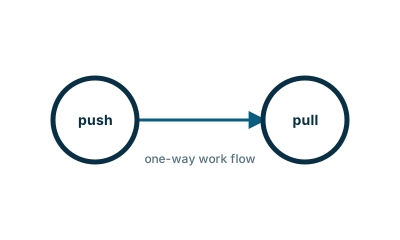
PUSH / PULL — One-Way Pipe
PUSH / PULL distributes independent work from senders to receivers.
pynng is an independently maintained Python binding for NNG. Its maintainers and release cycle are separate from the NNG core project.
This example is sourced from the project’s default branch. See the upstream example for its current history.
pipeline.py
"""
Demonstrate how to use a pipeline socket.

This pattern is useful for solving producer/consumer problems, including load-balancing.
Messages flow from the push side to the pull side.
If multiple peers are connected, the pattern attempts to distribute fairly.

"""

import pynng
import trio

address = "ipc:///tmp/pipeline.ipc"


async def node0(sock):
    async def recv_eternally():
        while True:
            try:
                msg = await sock.arecv_msg()
            except pynng.Timeout:
                break
            content = msg.bytes.decode()
            print(f'NODE0: RECEIVED "{content}"')

    return await recv_eternally()


async def node1(message):
    with pynng.Push0() as sock:
        sock.dial(address)
        print(f'NODE1: SENDING "{message}"')
        await sock.asend(message.encode())
        await trio.sleep(1)  # wait for messages to flush before shutting down


async def main():
    # open a pull socket, and then open multiple Push sockets to push to them.
    with pynng.Pull0(listen=address, recv_timeout=200) as pull:
        async with trio.open_nursery() as nursery:
            nursery.start_soon(node0, pull)
            for msg in ["A", "B", "C", "D"]:
                nursery.start_soon(node1, msg)


if __name__ == "__main__":
    try:
        trio.run(main)
    except KeyboardInterrupt:
        # that's the way the program *should* end
        pass
Run it
python -m pip install pynng trio
python pipeline.py