NNG pattern guide
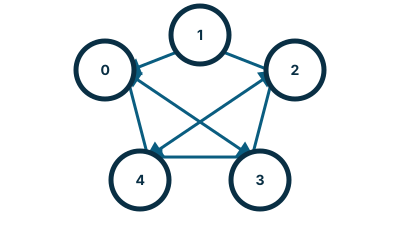
Bus (Routing)
The bus protocol is useful for routing applications, or for building fully interconnected mesh networks. In this pattern, messages are sent to every directly connected peer.
bus.c
#include <stdio.h>
#include <stdlib.h>
#include <string.h>
#include <unistd.h>

#include <nng/nng.h>

static int
nng_recv_alloc_(nng_socket sock, void **buf, size_t *size)
{
        nng_msg *msg = NULL;
        int rv;
        if ((rv = nng_recvmsg(sock, &msg, 0)) != 0) return rv;
        *size = nng_msg_len(msg);
        if ((*buf = nng_alloc(*size)) == NULL) { nng_msg_free(msg); return NNG_ENOMEM; }
        memcpy(*buf, nng_msg_body(msg), *size);
        nng_msg_free(msg);
        return 0;
}
#define nng_recv_alloc(sock, buf, size) nng_recv_alloc_((sock), (void **)(buf), (size))

void
fatal(const char *func, int rv)
{
        fprintf(stderr, "%s: %s\n", func, nng_strerror(rv));
        exit(1);
}

int
node(int argc, char **argv)
{
        nng_socket sock;
	int rv;
	size_t sz;

        if ((rv = nng_bus0_open(&sock)) != 0) {
                fatal("nng_bus0_open", rv);
        }
	if ((rv = nng_listen(sock, argv[2], NULL, 0)) != 0) {
                fatal("nng_listen", rv);
        }

        sleep(1); // wait for peers to bind
        if (argc >= 3) {
                for (int x = 3; x < argc; x++) {
                        if ((rv = nng_dial(sock, argv[x], NULL, 0)) != 0) {
                                fatal("nng_dial", rv);
                        }
                }
        }

	sleep(1); // wait for connects to establish

        // SEND
        sz = strlen(argv[1]) + 1; // '\0' too
        printf("%s: SENDING '%s' ONTO BUS\n", argv[1], argv[1]);
        if ((rv = nng_send(sock, argv[1], sz, 0)) != 0) {
                fatal("nng_send", rv);
        }

        // RECV
        for (;;) {
                char *buf = NULL;
		size_t sz;
                if ((rv = nng_recv_alloc(sock, &buf, &sz)) !=0) {
			if (rv == NNG_ETIMEDOUT) {
				fatal("nng_recv", rv);
			}
		}
		printf("%s: RECEIVED '%s' FROM BUS\n", argv[1], buf); (1)
                nng_free(buf, sz);
        }
        nng_socket_close(sock);
	return (0);
}

int
main(int argc, char **argv)
{
        if (argc >= 3) {
                return (node(argc, argv));
        }
        fprintf(stderr, "Usage: bus <NODE_NAME> <URL> <URL> ...\n");
        return 1;
}| 1 | Blithely assumes message is ASCIIZ string. Real code should check it. |
Compilation
gcc bus.c -lnng -o busExecution
./bus node0 ipc:///tmp/node0.ipc ipc:///tmp/node1.ipc ipc:///tmp/node2.ipc & node0=$!
./bus node1 ipc:///tmp/node1.ipc ipc:///tmp/node2.ipc ipc:///tmp/node3.ipc & node1=$!
./bus node2 ipc:///tmp/node2.ipc ipc:///tmp/node3.ipc & node2=$!
./bus node3 ipc:///tmp/node3.ipc ipc:///tmp/node0.ipc & node3=$!
sleep 5
kill $node0 $node1 $node2 $node3
Output
node3: SENDING 'node3' ONTO BUS
node0: SENDING 'node0' ONTO BUS
node1: SENDING 'node1' ONTO BUS
node2: SENDING 'node2' ONTO BUS
node0: RECEIVED 'node1' FROM BUS
node1: RECEIVED 'node0' FROM BUS
node2: RECEIVED 'node0' FROM BUS
node3: RECEIVED 'node1' FROM BUS
node0: RECEIVED 'node2' FROM BUS
node1: RECEIVED 'node2' FROM BUS
node3: RECEIVED 'node2' FROM BUS
node0: RECEIVED 'node3' FROM BUS
node2: RECEIVED 'node3' FROM BUS
node1: RECEIVED 'node3' FROM BUS
node3: RECEIVED 'node0' FROM BUS
node2: RECEIVED 'node1' FROM BUS
This migrated example has been checked against NNG main. It uses the current socket API and receives messages through nng_recvmsg; the original NNG_FLAG_ALLOC form is no longer available.